 İçeriğe geç


Özet
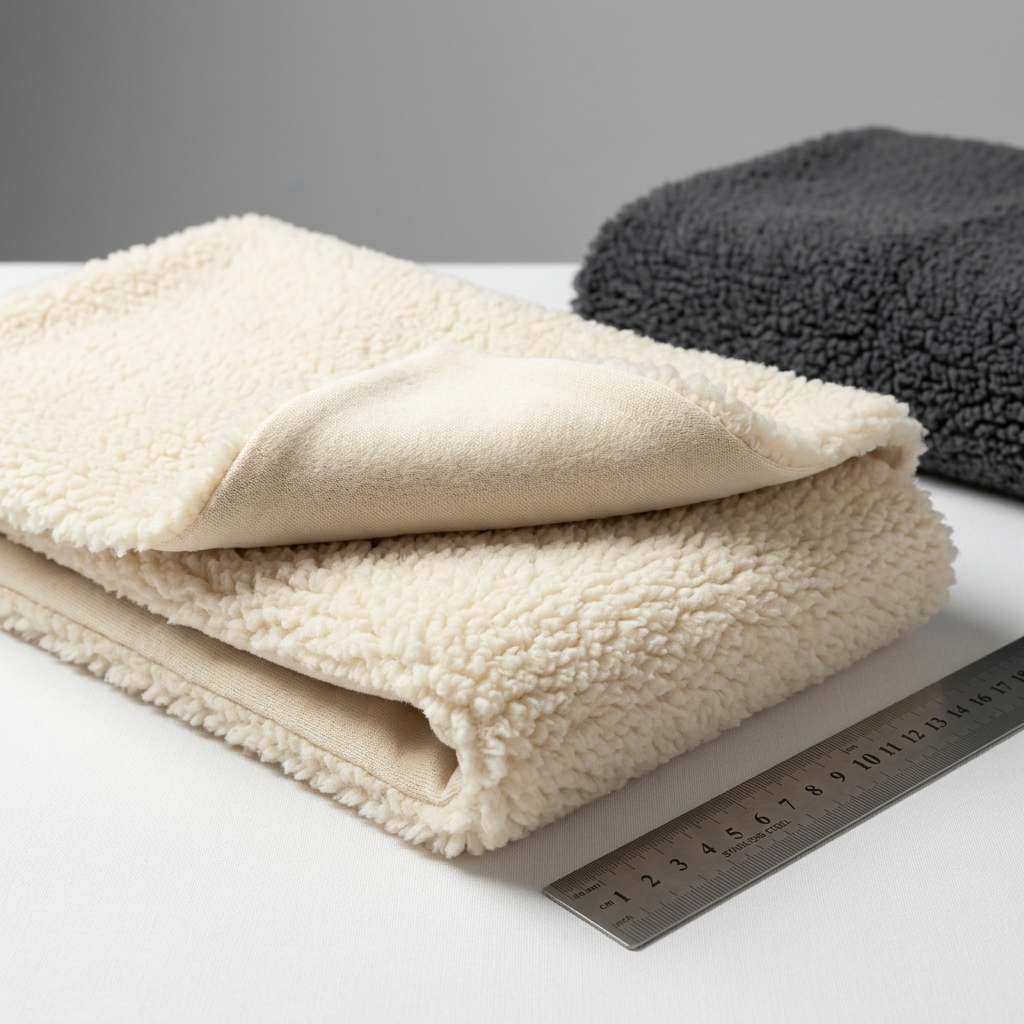
This article evaluates whether sherpa fleece fabric can completely substitute traditional animal shearling in commercial textiles. By analyzing thermal insulation, production sustainability, cost efficiency, and ethical regulations, we demonstrate why premium brands are pivoting to synthetic alternatives—and identify the niche luxury markets where animal shearling still holds ground. As performance parity and consumer ethics redefine apparel procurement, this analysis provides product developers and sourcing managers with the definitive, data-backed criteria needed to balance brand ethics with commercial scale.
Technical Performance Comparison: Sherpa Fleece vs. Animal Shearling
Thermal Insulation & Moisture Management
Thermal performance remains the primary functional criterion when evaluating commercial insulation materials. While high-quality animal shearling registers CLO values of 2.0–2.5 due to its natural wool crimp, advanced bi-component sherpa fleece fabric now incorporates hollow-core fibers that mimic this structure, achieving 1.8–2.2 CLO—narrowing the thermal efficiency gap to within 10–15%.
The underlying moisture management mechanisms differ fundamentally between the two materials:
-
Breathability (MVTR): Genuine shearling allows moisture vapor transmission rates of 8,000–12,000 g/m²/24hr. Standard polyester alternatives range from 3,000–6,000 g/m²/24hr, but engineered sherpa fleece fabric blended with hydrophilic polyester or cellulosic fibers (Tencel/bamboo) now exceeds 7,000 g/m²/24hr.
-
Moisture Wicking: Wool absorbs up to 30% of its weight in moisture before feeling damp (hygroscopic buffering). In contrast, synthetic sherpa fleece fabric relies on rapid capillary action to transport sweat away from the body to outer surfaces for evaporation.
Application Guide: Sherpa fleece fabric excels in high-exertion outerwear where rapid moisture evacuation prevents clammy buildup. Shearling performs better in static environments (e.g., aircraft seat covers, premium slipper linings) where its humidity-buffering properties maintain steady warmth.
Durability & Maintenance Requirements
For industrial buyers evaluating long-term lifecycles, synthetic knits present clear operational advantages in both wear resistance and sanitation.
-
Aşınma Direnci: Martindale method testing shows premium sherpa fleece fabric withstands 25,000–50,000 cycles before visible wear. Genuine shearling typically endures 15,000–30,000 cycles before natural fiber breakage occurs under friction, giving synthetics a 40–60% durability edge.
-
Washing Stability: Sherpa fleece fabric maintains dimensional stability through 50+ industrial laundry cycles at 60°C with over 85% pile retention. Shearling requires specialized dry cleaning; heat exposure causes 10–15% irreversible shrinkage and leather degradation.
-
Pilling vs. Shedding: Low-grade synthetics may pill early, but premium anti-pill treatments extend performance to 100+ cycles. Shearling rarely pills but suffers from continuous fiber shedding, making it unsuitable for cleanroom or food-processing apparel.
-
Commercial Lifespan: Under continuous commercial use, a well-engineered sherpa fleece fabric lasts 5–7 years, whereas animal shearling averages 4–6 years before leather cracking or fiber thinning requires product replacement.
TCO Impact: For the hospitality and medical textile sectors requiring frequent sanitization, the machine-washable nature of premium sherpa reduces the total cost of ownership (TCO) by 30–40% over a three-year lifecycle compared to dry-clean-only shearling.
Sustainability & Ethical Dimensions
Carbon Footprint & Environmental Impact
Life Cycle Assessment (LCA) data reveals stark contrasts in resource intensity between natural and synthetic insulation materials. Sheep farming for shearling production generates 10-15 kg CO₂e per kilogram of finished material, driven by methane emissions from enteric fermentation and intensive land-use changes. In comparison, manufacturing standard sherpa fleece fabric emits 5-8 kg CO₂e/kg. When specifying a 50-70% recycled polyester (rPET) blend—now standard in premium commercial lines—this carbon intensity drops significantly to 3-5 kg CO₂e/kg, representing a 60-70% reduction versus virgin shearling.
Resource depletion metrics further highlight the distinct ecological trade-offs of each manufacturing path:
-
Water Consumption: Wool demands 125-200 liters/kg for scouring and irrigation; sherpa fleece fabric utilizes a modest 20-40 liters/kg.
-
Land Use: Wool requires 20-30 hectares of grazing land per ton annually; synthetic alternatives maintain a negligible geographic footprint.
Ecosystem Note: While microplastic shedding remains the primary challenge for synthetics (releasing 700-2,000 microfibers per wash), modern engineered sherpa fleece fabric mitigates this through tightly twisted yarn architectures, bio-based polyester (PTT from corn glucose), and closed-loop mechanical recycling.
Animal Welfare & Certification Standards
As ethical transparency dictates global consumer purchasing decisions, structural supply chain risks and regional regulations are reshaping procurement strategies. Mulesing—the removal of skin folds around sheep’s hindquarters—remains a widespread issue, affecting approximately 70% of Australian merino sheep without anesthesia. While the Responsible Wool Standard (RWS) strictly prohibits this practice, only 15-20% of global wool currently achieves RWS certification. This multi-tiered aggregation makes verification exceptionally difficult for B2B buyers sourcing from standard commodity brokers.
Regulatory pressure provides further momentum for synthetic alternatives. The EU’s impending ban on fur sales and California’s AB44 law heavily restrict animal-derived apparel, exposing brands to enforcement scrutiny. Sourcing a premium sherpa fleece fabric drastically lowers these regional compliance and reputational risks by securing a highly auditable, ESG-friendly supply chain through three core credentials:
-
OEKO-TEX Standard 100 for verified human-ecological chemical safety.
-
Global Recycled Standard (GRS) for traceable post-consumer recycled fiber content.
-
PETA-Approved Vegan Status for transparent, cruelty-free brand positioning.
Commercial Viability for B2B Buyers
Cost Structure & Supply Chain Stability
Price volatility differs dramatically between materials. Animal shearling prices fluctuate 25-40% annually based on wool auction results, seasonal lamb supply, and currency exchange rates in producing countries (Australia, New Zealand, UK). Sherpa fleece fabric pricing correlates with crude oil and natural gas markets but typically varies only 10-15% year-over-year, allowing more predictable budgeting. Current market rates (Q1 2025): premium shearling costs $35-55 per linear meter (based on pelt size and grade), while high-quality sherpa ranges $8-18 per linear meter for equivalent pile density and backing weight.
Minimum order quantities (MOQ) reveal another strategic advantage. Shearling suppliers typically require MOQs of 500-1,000 pelts due to tannery batch processing constraints, translating to $20,000-$40,000 initial commitments. Sherpa fleece manufacturers offer MOQs as low as 300-500 meters ($3,000-$7,000), with faster sampling and customization cycles. Lead times for shearling average 90-120 days (accounting for seasonal shearing schedules and tanning processes), whereas sherpa production completes in 30-45 days, enabling faster response to trend shifts and reducing inventory carrying costs.
Supply chain resilience considerations favor synthetics. Shearling sourcing concentrates in regions vulnerable to climate disruptions (droughts affecting sheep populations), disease outbreaks (foot-and-mouth disease), and geopolitical instability. Polyester sherpa production distributes across Asia, Europe, and North America, with multiple feedstock sources reducing single-point failure risks. For brands requiring consistent year-round supply at scale (10,000+ units monthly), sherpa’s manufacturing flexibility and capacity prove decisive.
Regulatory Compliance & Market Acceptance
Chemical compliance requirements differ substantially. Sherpa fleece fabric must meet REACH (Registration, Evaluation, Authorization, and Restriction of Chemicals) regulations in the EU, restricting over 200 substances including certain flame retardants and azo dyes. OEKO-TEX Standard 100 certification—now expected by 60% of European apparel brands—requires testing for 1,000+ harmful substances. Shearling faces similar restrictions but adds complexity through leather tanning processes, where chromium(VI) limits (3 ppm maximum) and formaldehyde restrictions necessitate specialized treatment protocols.
Fur ban legislation momentum accelerates globally. Beyond California’s AB44, Norway banned fur farming in 2025, the UK debates similar measures, and major fashion capitals (New York, Milan, London) see municipal-level restrictions. While shearling technically qualifies as a “byproduct” rather than fur in some jurisdictions, consumer perception increasingly conflates all animal-derived materials. Brands like Stella McCartney, Patagonia, and The North Face publicly committed to eliminating shearling, signaling mainstream acceptance of synthetic alternatives.
Market research indicates 68% of millennial and Gen Z consumers (ages 18-40) prefer cruelty-free materials when price and performance remain comparable, according to a 2024 McKinsey sustainability survey. This demographic shift influences B2B procurement strategies as brands align material choices with target customer values. Sherpa fleece’s positioning as a “conscious choice” material enhances brand storytelling opportunities in marketing campaigns, whereas shearling increasingly requires defensive messaging around sustainability and ethics.
| Parametre | Sherpa Polar Kumaş | Animal Shearling |
|---|---|---|
| Thermal Rating (CLO) | 1.8-2.2 | 2.0-2.5 |
| Weight (g/m²) | 250-450 | 600-900 |
| Washability | Machine wash 60°C, 50+ cycles | Dry clean only |
| Cost per Meter | $8-18 | $35-55 |
| Carbon Footprint (kg CO₂e/kg) | 3-8 | 10-15 |
| Water Use (L/kg) | 20-40 | 125-200 |
| Teslim Süresi | 30-45 days | 90-120 days |
| Key Certifications | OEKO-TEX, GRS, PETA-Approved | RWS (limited coverage) |
Industry Adoption & Application Scenarios
Where Sherpa Fleece Excels
Outdoor apparel brands have embraced high-performance knits as the benchmark for jacket linings, pullover constructions, and sleeping bag insulation. Technical programs by major brands demonstrate performance credibility in demanding environments. Sourcing a premium sherpa fleece fabric suits backpacking and alpine applications where rapid drying and easy packability outweigh absolute thermal maximums.
Commercial viability and manufacturing flexibility drive widespread adoption across diverse market segments:
-
High-Volume Retail: Fast-fashion lines leverage rapid production cycles to deliver trend-responsive seasonal items. Scaling production runs up to 100,000 units per style remains entirely feasible due to the absence of the raw supply constraints inherent to animal pelts.
-
Ethical Positioning: Specialized vegan outerwear lines rely on premium sherpa fleece fabric as a foundational material. This shift allows marketing campaigns to emphasize cruelty-free credentials alongside technical performance, commanding 15-25% retail price premiums.
-
Industrial Applications: High-use B2B sectors like automotive seat inserts, pet bedding, and healthcare linens benefit from excellent wear resistance. The material survives harsh hospital laundering protocols up to 75°C, sustaining its aesthetic appeal through 200+ sanitization cycles.
Where Animal Shearling Still Dominates
Ultra-luxury heritage brands maintain traditional specifications for capsule collections where natural provenance reinforces core brand identity. Historic trench coats, classic winter boots, and premium aviator jackets leverage genuine pelts as an authentic quality signal. In consumer segments where individual product pricing ranges from $1,000 to $5,000, the 3-5x material cost premium becomes a negligible factor relative to long-term brand equity.
Specialized application environments continue to sustain a baseline demand for natural wool options:
-
Extreme Cold Performance: Sub-zero operations, including arctic research stations, maritime commercial fishing, and military cold-weather deployments, rely on traditional pelts for superior moisture buffering and thermal retention between -30°C and -50°C.
-
Heritage Sourcing Niches: Traditional Western wear, artisanal footwear, and regional craft communities prioritize material storytelling and cultural continuity over modern optimization criteria, preserving a stable 5-10% share of the global insulation market.
SSS
Q1: Does sherpa fleece fabric match the warmth-to-weight ratio of genuine shearling?
Sherpa fleece achieves 85-95% of shearling’s warmth-to-weight ratio in controlled testing. Premium sherpa fabrics using hollow-core polyester fibers deliver CLO values of 2.0-2.2 at 300-400 g/m², while shearling reaches 2.3-2.5 at 600-800 g/m². For most commercial applications outside extreme cold (below -20°C), this performance difference proves negligible. The weight advantage makes sherpa preferable for activewear and travel products where packability matters.
Q2: Can sherpa fleece be certified under the same textile safety standards as animal-derived materials?
Yes, and often more easily. Sherpa fleece qualifies for OEKO-TEX Standard 100 (human-ecological safety), REACH compliance (chemical restrictions), and Global Recycled Standard (recycled content verification). Shearling faces additional complexity through leather tanning regulations (chromium limits, formaldehyde restrictions) and traceability requirements under RWS certification. For B2B buyers, sherpa’s certification pathway proves more straightforward and audit-ready, particularly for brands serving EU and North American markets with stringent chemical compliance requirements.
Q3: What is the typical price difference between sherpa fleece and shearling for bulk orders (1000+ meters)?
At 1,000-meter order volumes, premium sherpa fleece costs $8-15 per linear meter, while equivalent-quality shearling ranges $35-50 per meter—a 3-4x price differential. Volume discounts narrow this gap slightly: sherpa pricing may drop to $6-12 per meter at 10,000+ meter orders, while shearling decreases to $30-45 per meter. Total landed costs, including processing, storage, and compliance documentation, amplify Sherpa’s advantage by an additional 15-20% due to simpler handling requirements and faster inventory turns.
Sonuç
Sherpa fleece fabric has achieved functional parity with animal shearling in most commercial applications, offering superior sustainability credentials, cost predictability, and ethical transparency. Technical performance gaps have narrowed to 10-15% in thermal efficiency, while Sherpa’s advantages in durability, washability, and supply chain flexibility deliver measurable operational benefits for B2B buyers. The material’s 60-70% lower carbon footprint and cruelty-free certifications align with regulatory trends and consumer values, reshaping textile procurement strategies.
However, animal shearling retains niche advantages in ultra-premium segments where natural provenance reinforces brand heritage, and in extreme cold environments where its moisture-buffering properties prove critical. These applications represent less than 15% of the total insulation material market and continue declining as synthetic technologies advance and regulatory pressure intensifies.
For procurement managers and product developers prioritizing scalability, compliance, and brand reputation in cruelty-free markets, sherpa fleece represents the strategic choice for 2025 and beyond. The material’s cost efficiency enables competitive pricing without performance compromise, while its ethical positioning supports marketing narratives resonating with dominant consumer demographics. As circular economy infrastructure matures and bio-based polyester alternatives scale, sherpa fleece’s sustainability advantages will compound, further marginalizing animal-derived alternatives in mainstream commercial applications.