 Skip to content


Abstract
Sherpa fleece is a premium synthetic fabric designed to replicate the warmth and texture of natural sheepskin. This comprehensive guide explores its construction, technical properties, performance standards, and commercial applications in the apparel and textile industries. Ideal for B2B buyers seeking cost-effective thermal insulation solutions.
What is Sherpa Fleece – Definition and Origin
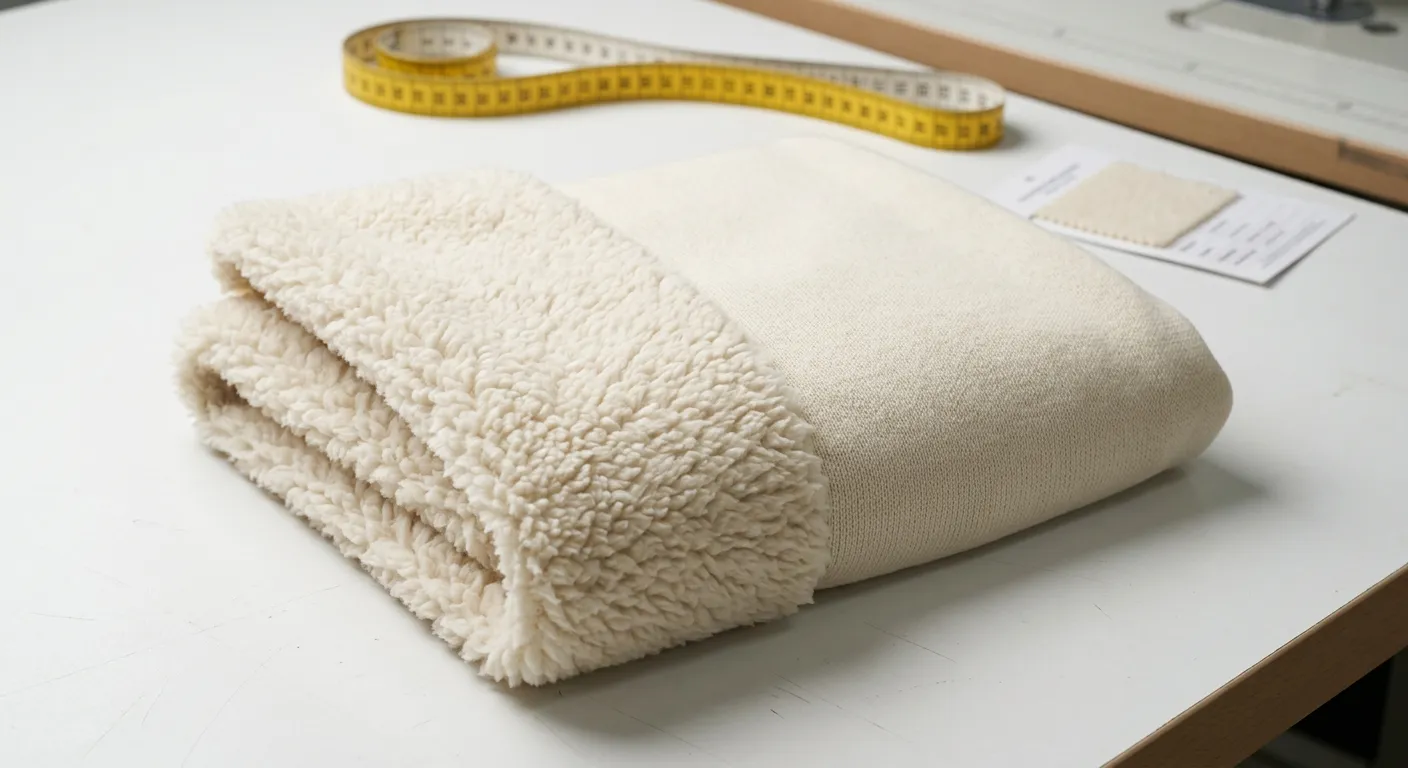
Sherpa fleece is a specialized synthetic textile characterized by its distinctive two-sided construction: a smooth knit face and a deeply piled, fluffy reverse side that mimics the texture of sheep’s wool. Named after the Sherpa people of Nepal, who are renowned for their mountain-climbing expertise in extreme cold conditions, this fabric was engineered to provide comparable warmth without the weight, allergens, or maintenance challenges of natural sheepskin.
The fabric composition typically consists of 100% polyester or polyester-acrylic blends, with fiber deniers ranging from 75D to 150D depending on the intended application. The synthetic nature allows for precise control over pile density, uniformity, and thermal properties while maintaining cost efficiency for large-scale production. Unlike natural wool, sherpa fleece exhibits consistent performance across production batches and eliminates concerns about animal welfare compliance—a growing priority for brands targeting ethically conscious consumer segments.
The defining feature is the asymmetric pile structure: the smooth side facilitates easy layering against skin or other fabrics, while the high-loft reverse side (typically 8-12mm pile height) traps air pockets for superior insulation. This dual-face architecture makes sherpa fleece particularly suitable for garment linings, reversible apparel, and home textile applications where both aesthetic appeal and functional warmth are required.
Manufacturing Process and Fabric Architecture
Sherpa fleece production employs circular knitting technology using specialized double-needle bed machines. The base fabric is knitted with polyester yarns in a jersey or interlock structure, creating the smooth foundation layer. Simultaneously or in a secondary process, longer pile yarns are introduced through the fabric substrate, creating the characteristic fuzzy surface.
Key manufacturing parameters include:
- Pile Height Specification: Standard commercial sherpa ranges from 8-12mm, with premium variants reaching 15mm for enhanced thermal performance
- Gauge Selection: Typically 18-28 gauge machines, with finer gauges producing denser, more uniform pile distribution
- Yarn Count Configuration: Base fabric uses 150D-300D yarns, while pile construction employs 75D-150D for optimal loft-to-weight ratio
- Bonding Method: Advanced Sherpa constructions may incorporate anti-pill chemical treatments or mechanical brushing during finishing
Post-knitting processes are critical for quality differentiation. Industrial-grade sherpa undergoes multiple finishing stages:
- Heat Setting: Stabilizes fabric dimensions at 180-200°C to prevent shrinkage during end-use
- Mechanical Brushing: Raises pile fibers to achieve target loft and hand-feel
- Anti-Pilling Treatment: Application of silicone or resin-based coatings to enhance surface durability
- Shearing: Precision cutting of pile tips to achieve uniform height and professional appearance
The fabric’s GSM (grams per square meter) typically ranges from 200-400 GSM, with 280-320 GSM representing the optimal balance between warmth, drape, and cost for apparel applications. Heavier constructions (350-400 GSM) are reserved for home textiles and industrial uses where maximum insulation is prioritized over garment flexibility.
Technical Properties and Performance Standards
Thermal Insulation and Moisture Management
Sherpa fleece delivers exceptional thermal efficiency through its high-loft pile structure, which creates dead air spaces that resist convective heat loss. Laboratory testing demonstrates CLO values (thermal insulation units) ranging from 1.2-1.8 CLO depending on fabric weight and pile density—comparable to medium-weight wool blankets but at 40-50% lower material cost.
Thermal Performance Metrics:
- Thermal Resistance (R-value): 0.8-1.2 m²·K/W for standard 300 GSM constructions
- Air Permeability: 80-150 mm/s (moderate breathability, suitable for active wear)
- Moisture Vapor Transmission Rate: 3000-4500 g/m²/24hr, enabling effective body heat regulation during moderate activity
The synthetic fiber composition provides inherent hydrophobic properties—polyester absorbs less than 0.4% of its weight in water, compared to wool’s 30% absorption capacity. This characteristic enables rapid drying (typically 2-3 hours at ambient temperature) and prevents the heavy, clammy sensation associated with wet natural fibers. However, this same property limits moisture-wicking performance in high-perspiration scenarios, making sherpa fleece more suitable for outer layers or static insulation applications rather than base layers for intense athletic activities.
Advanced sherpa constructions incorporate moisture management treatments such as:
- Hydrophilic fiber cross-sections for improved wicking (increases MVTR by 15-20%)
- Anti-microbial silver ion treatments for odor control in extended-wear applications
- DWR (Durable Water Repellent) finishes on the smooth face for light weather resistance
Durability and Maintenance Requirements
Sherpa fleece exhibits superior dimensional stability compared to natural alternatives, with typical shrinkage rates below 3% after industrial laundering when properly heat-set during manufacturing. The synthetic fiber structure resists biological degradation, moth damage, and mildew—critical advantages for long-term storage and tropical climate applications.
Pilling Resistance: This represents the primary durability concern for sherpa fleece. Standard constructions rate 3-3.5 on the 5-point Martindale pilling scale after 5,000 abrasion cycles. Premium anti-pill treatments can elevate performance to 4-4.5 ratings, extending serviceable life by 40-60%. Procurement specifications should mandate minimum pilling grades of 3.5 for commercial apparel applications.
Laundering Specifications for B2B Buyers:
- Wash Temperature: Maximum 40°C (104°F) to preserve pile integrity
- Drying Protocol: Tumble dry low heat (60°C max) or air dry; high heat causes fiber melting and pile matting
- Chemical Compatibility: Resistant to standard detergents; avoid chlorine bleach, which degrades polyester bonds
- Commercial Laundry Cycles: Rated for 50-75 industrial wash cycles before noticeable pile degradation in standard constructions; premium grades achieve 100+ cycles
Expected service life ranges from 2-3 years for high-use apparel applications to 5-7 years for home textile uses under normal care conditions.
| Performance Metric | Sherpa Fleece | Polar Fleece | Natural Sheepskin |
|---|---|---|---|
| Thermal Insulation (CLO) | 1.2-1.8 | 0.8-1.2 | 1.5-2.0 |
| Weight (300 GSM equivalent) | 300 g/m² | 280 g/m² | 850 g/m² |
| Breathability (mm/s) | 80-150 | 200-350 | 50-100 |
| Price Range (FOB per meter) | $3.50-$6.00 | $2.50-$4.00 | $25.00-$45.00 |
| Durability Rating (1-5) | 4.0 | 4.5 | 3.5 |
| Maintenance Complexity | Low | Low | High |
Commercial Applications and Market Positioning
Apparel Industry Use Cases
Sherpa fleece has achieved widespread adoption across multiple garment categories due to its versatile thermal properties and aesthetic appeal. Primary applications include:
Jacket Linings: The most significant market segment, accounting for approximately 45% of sherpa fleece consumption. The fabric serves as a removable or permanent lining in denim jackets, bomber jackets, and technical outerwear. Typical specifications call for 250-300 GSM constructions to balance warmth with garment mobility.
Athleisure and Loungewear: The soft hand-feel and visual texture have driven sherpa’s integration into hoodies, sweatpants, and zip-up pullovers. Brands targeting the $50-$150 retail price point favor sherpa accents (collars, cuffs, pocket linings) to elevate perceived value without significantly increasing production costs.
Outdoor Performance Gear: Mid-layer fleece jackets and vests for hiking, camping, and winter sports utilize 320-380 GSM sherpa constructions. This segment demands enhanced specifications, including anti-pill ratings above 4.0, reinforced stitching compatibility, and colorfastness grade 4-5 to withstand UV exposure and frequent laundering.
Home Textiles: Blankets, throws, and pet bedding represent a growing application area. These products typically employ heavier 350-400 GSM fabrics with less stringent pilling requirements but enhanced softness parameters.
Procurement Considerations for B2B Buyers
Strategic sourcing of Sherpa fleece requires attention to several commercial parameters:
Minimum Order Quantities (MOQ): Standard MOQs range from 500-1,000 meters per color for stock fabrics, with custom specifications (unique GSM, pile height, or treatments) requiring 2,000-3,000 meter commitments. Vertically integrated suppliers may offer lower MOQs (300-500 meters) for established clients.
GSM Selection Guidelines:
- 200-250 GSM: Lightweight applications, spring/fall layering pieces, cost-sensitive products
- 280-320 GSM: Standard apparel grade, optimal warmth-to-weight ratio
- 350-400 GSM: Premium outerwear linings, home textiles, maximum insulation
Customization Options: Lead suppliers offer extensive customization, including:
- Color matching (minimum 500m per custom color)
- Pile height variations (±2mm from standard)
- Width specifications (58″-62″ standard; 72″ available for home textiles)
- Specialty treatments (flame retardant, anti-static, enhanced anti-pill)
Pricing Dynamics: FOB prices exhibit significant variation based on specifications:
- Standard polyester sherpa (300 GSM): $3.50-$4.50/meter
- Anti-pill treated premium grade: $4.80-$6.00/meter
- Recycled polyester constructions: +$0.80-$1.20/meter premium
- Custom color development: $200-$400 setup fee plus material surcharge
Lead times typically range from 25-35 days for stock fabrics to 45-60 days for custom specifications, with an additional 15-20 days for container shipping from Asian manufacturing hubs.
Compliance and Quality Assurance
Industry Standards and Certifications
Professional procurement requires verification of compliance with international textile safety and environmental standards:
Oeko-Tex Standard 100: This certification verifies that sherpa fleece is free from harmful substances, including prohibited azo dyes, formaldehyde, heavy metals, and pesticides. Product Class II (direct skin contact) certification is standard for apparel applications, while Class I (infant products) requires enhanced testing protocols. Certification costs approximately $2,000-$4,000 annually per production facility but provides essential market access for European and North American brands.
REACH Compliance: The European Union’s Registration, Evaluation, Authorization, and Restriction of Chemicals regulation restricts over 200 substances in textile products. Compliant sherpa fleece must provide SVHC (Substances of Very High Concern) declarations and maintain substance concentrations below 0.1% threshold limits. Non-compliance risks customs detention and product recalls.
Flammability Standards: Applications in children’s sleepwear or public-use textiles (hospitality, healthcare) must meet jurisdiction-specific flammability requirements:
- US 16 CFR 1610: General wearing apparel flammability (Class 1 normal flammability required)
- UK BS 5722: Flammability of fabrics for nightwear (requires flame-retardant treatment for sherpa fleece)
- California TB 117-2013: Upholstered furniture flammability standards
Standard untreated sherpa fleece typically achieves Class 1 flammability ratings but may require FR (flame retardant) chemical treatments for specific applications, adding $0.60-$1.00/meter to production costs.
Quality Control Metrics
Implementing rigorous inspection protocols ensures consistent fabric performance across production runs:
Color Consistency: Delta E (ΔE) values should not exceed 1.0 between production batches for solid colors, measured using spectrophotometry under D65 illumination. Colorfastness testing per ISO 105 standards should demonstrate minimum Grade 4 results for:
- Washing (ISO 105-C06)
- Perspiration (ISO 105-E04)
- Light exposure (ISO 105-B02, minimum 40 hours)
Dimensional Stability: Fabrics must demonstrate less than 3% shrinkage in both warp and weft directions after three wash cycles per AATCC Test Method 135. Premium specifications may require <2% shrinkage tolerance.
Pile Retention: Random sampling should verify pile height uniformity within ±0.5mm across fabric width, with pile density variation not exceeding 5% as measured by weight per unit area testing.
Physical Property Testing:
- Tensile strength: Minimum 200N (warp) / 180N (weft) per ASTM D5034
- Tear strength: Minimum 25N per ASTM D1424
- Seam slippage: Maximum 4mm displacement at 100N load per ASTM D434
Third-party testing through accredited laboratories (SGS, Intertek, Bureau Veritas) provides independent verification and costs approximately $400-$800 per comprehensive fabric test report.
FAQ
What is the difference between Sherpa fleece and regular polar fleece?
Sherpa fleece features an asymmetric two-sided construction with a smooth knit face and high-pile reverse (8-12mm), specifically designed to mimic sheepskin texture. Polar fleece exhibits uniform pile on both sides with shorter nap (3-5mm) and emphasizes breathability over maximum insulation. Sherpa provides 30-40% greater thermal resistance but weighs 15-20% more than equivalent polar fleece. Cost differential averages $1.00-$1.50/meter higher for Sherpa due to complex manufacturing requirements.
Is Sherpa fleece suitable for industrial workwear applications?
Sherpa fleece can serve as an effective insulation layer in workwear jackets and vests for cold-storage facilities, outdoor construction, and winter maintenance operations. However, the high-pile surface is prone to snagging and debris accumulation in environments with exposed machinery or rough surfaces. Industrial applications should specify anti-pill ratings of a minimum 4.0, reinforced seam construction, and potentially shorter pile heights (6-8mm) to balance warmth with durability. For heavy industrial use, consider Sherpa as a removable liner rather than exterior fabric.
How does Sherpa fleece perform in commercial laundering environments?
Standard sherpa fleece withstands 50-75 commercial laundry cycles before significant pile degradation when processed at maximum 70°C wash temperatures with pH-neutral detergents. Premium anti-pill treated constructions achieve 100+ cycles while maintaining an acceptable appearance. Critical factors include avoiding chlorine bleach (causes fiber embrittlement), limiting mechanical agitation intensity, and using low-heat drying (maximum 60°C) to prevent pile matting. For hospitality or healthcare applications requiring frequent laundering, specify premium-grade sherpa with enhanced anti-pill treatments and conduct accelerated wash testing (minimum 25 cycles) before bulk procurement.
Conclusion
Sherpa fleece combines cost efficiency with superior thermal performance, making it a strategic choice for brands targeting cold-weather markets. Understanding its technical specifications and compliance requirements enables informed sourcing decisions for textile procurement professionals. The fabric’s synthetic composition delivers consistent quality, simplified maintenance, and ethical sourcing advantages compared to natural alternatives, while its distinctive aesthetic appeals to contemporary consumer preferences for texture-rich apparel. Successful procurement requires balancing GSM specifications, anti-pill performance grades, and certification requirements against target retail price points and intended use environments. As sustainability pressures intensify, the emergence of recycled polyester sherpa constructions offers brands an opportunity to maintain thermal performance while advancing environmental commitments—a consideration that will increasingly influence purchasing decisions in the evolving B2B textile landscape.